




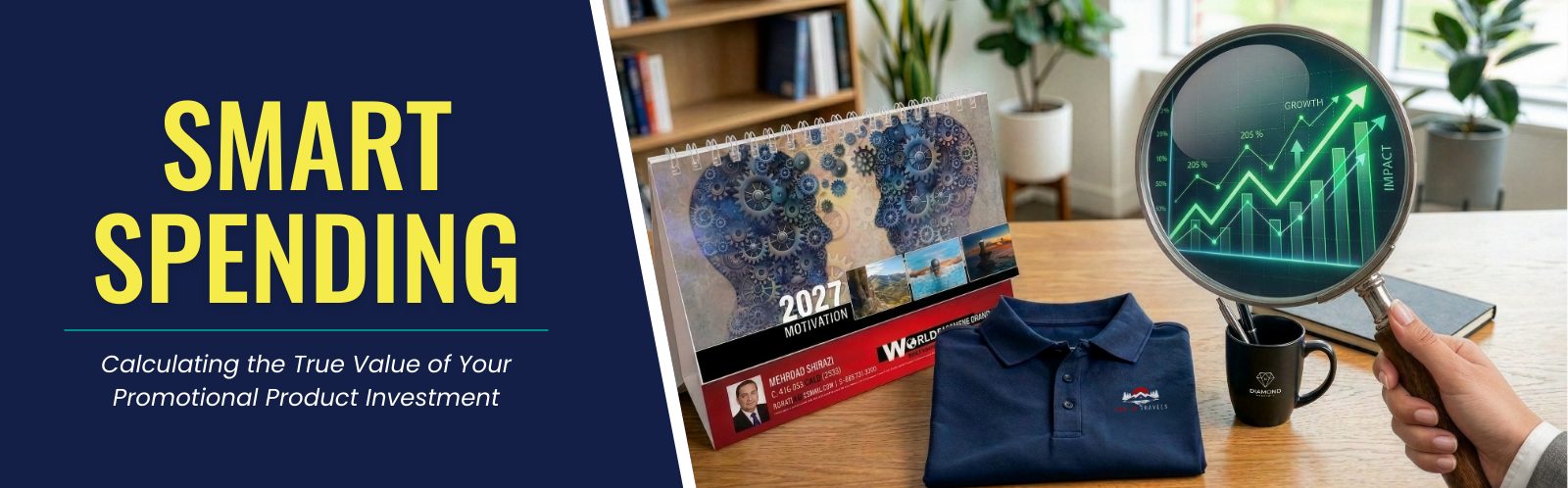

Many small and medium-sized businesses (SMBs) consistently seek effective ways to grow their brand and connect with their audience. While the desire to invest in marketing is strong, a common challenge emerges: quantifying the return on investment (ROI) for every dollar spent. Promotional products, in particular, often fall into a grey area where their initial cost is clear, but their ongoing value can be harder to pinpoint. Understanding the true impact of these tangible marketing tools requires moving beyond just the purchase price and looking at their long-term reach and influence.
This article will clarify the concept of "cost-per-impression" as it applies to promotional products. By exploring real-world examples, such as the lasting presence of custom wall calendars and the broad visibility of branded t-shirts from COMDA’s catalogue, businesses can develop a clearer framework for evaluating their marketing expenditures. This approach allows for more informed decisions, helping maximize marketing budgets and ensuring that every promotional item serves a strategic purpose in brand growth.
Decoding Cost-Per-Impression for Promotional Products
Cost-per-impression (CPI) is a fundamental metric in advertising, typically used to measure the cost of one thousand views or exposures to an advertisement (CPM, cost per mille). For promotional products, CPI offers a valuable lens through which to assess their efficiency. Unlike a single digital ad impression that flashes by in an instant, a promotional product delivers repeated exposures over an extended period. This means a single investment can generate numerous brand touchpoints, significantly influencing its overall value proposition.
When calculating CPI for promotional products, the focus shifts from a fleeting view to sustained engagement. Businesses need to consider how often a product will be seen, by how many people, and for how long. A well-chosen promotional item can become a constant, subtle reminder of a brand, weaving itself into the daily lives of recipients and those around them. This extended lifespan and consistent visibility are what truly differentiate promotional products from many other marketing channels.
The Longevity Factor: Custom Calendars
Consider the humble custom wall calendar. At first glance, it might seem like a simple, functional item. However, its marketing power lies in its enduring presence and utility. A custom calendar, adorned with a company's logo, colours, and messaging, typically hangs in a prominent location for an entire year. Each day, the recipient, their colleagues, or their family members glance at it for dates, appointments, or simply to check the day.
COMDA’s custom wall calendars serve as an excellent illustration of this principle. Designed to be both visually appealing and highly practical, they are not just marketing giveaways; they are functional tools that provide value. Throughout the year, they offer hundreds, if not thousands, of direct impressions. If a calendar costs a few dollars and is seen five times a day by one person, and occasionally by others in an office or home setting, it delivers consistent brand exposure over 365 days.

To consider the CPI for a custom calendar, one might think: what is the total cost of the calendar divided by the total number of estimated views over its lifespan? For example, a calendar displayed for 365 days, seen an average of 3-5 times daily by the primary user, and perhaps 1-2 times daily by others, accumulates a significant number of impressions. A calendar costing five dollars that generates 1,825 views from the primary user alone (5 views/day * 365 days) has a CPI of roughly 0.0027 cents per impression. When you factor in secondary viewers, the CPI becomes even more attractive. This constant, unobtrusive visibility builds familiarity and reinforces brand recognition over time, making it a powerful, year-long marketing asset.
Widespread Visibility: Branded Apparel
In contrast to the static, long-term presence of a calendar, branded apparel offers dynamic, widespread visibility. A custom t-shirt, hoodie, or cap transforms the wearer into a mobile advertisement for a business. Every time someone wears a branded item in public—at a grocery store, a local event, a gym, or even just walking down the street—the brand gains exposure to a new audience.
COMDA offers a wide range of branded apparel, from corporate casual wear to event-specific t-shirts, all designed to make a statement. The true value of branded apparel lies in its ability to generate numerous impressions across diverse environments. Unlike a billboard with a fixed location, a person wearing a branded t-shirt carries the message wherever they go, reaching individuals who might not otherwise encounter the brand.
Calculating the CPI for branded apparel involves estimating how often an item is worn and how many people are likely to see it during each wear. For instance, a quality branded t-shirt might be worn dozens of times over several years. If a t-shirt costs fifteen dollars and is worn fifty times, with each wearing generating an average of twenty unique views, it produces 1,000 impressions. This results in a CPI of 0.015 cents per impression. While it can be more challenging to track the exact number of impressions generated by apparel, its potential for broad, organic reach is undeniable. It leverages social proof and personal endorsement, often making the brand seem more approachable and relatable.
Beyond the Numbers: Intangible Value
While CPI provides a quantifiable measure of reach, the true value of promotional products extends far beyond simple impressions. These items foster intangible benefits that are crucial for brand building and customer loyalty, yet are harder to measure with a direct formula.
- Brand Perception and Goodwill: Giving a useful, high-quality promotional item creates a positive association with a brand. It conveys thoughtfulness and generosity, enhancing the recipient's perception of the business.
-
Customer Loyalty and Retention: Promotional products can serve as tangible reminders of positive past interactions, fostering a sense of appreciation and strengthening customer loyalty. This can lead to repeat orders and long-term client relationships. For instance, sending a surprise and delight mailer during a perceived slow period, containing a useful branded item, can reignite engagement.

- Word-of-Mouth Marketing: A distinctive or particularly useful promotional product often sparks conversations. A recipient might show it to a friend or colleague, leading to organic word-of-mouth referrals—a highly credible form of marketing.
- Employee Morale and Recruitment: For internal use, branded merchandise can boost employee morale, foster a sense of belonging, and act as an attractive perk for new recruits. Onboarding kits, for example, featuring branded items, help integrate new team members and reinforce company culture.
- Community Engagement: Items distributed at grassroots events, such as Little League games or community outreach programs, embed a brand within the local fabric, building trust and engagement.
These intangible benefits, while not directly tied to a numerical CPI, are fundamental to building a robust brand and strong customer connections. They complement the measurable aspects of promotional product investment, creating a holistic strategy for growth.
Maximizing Your Promotional Product Investment
To truly maximize the value of promotional products, businesses should adopt a strategic approach that goes beyond merely choosing an item.
- Understand Your Audience: Tailor product selection to the specific demographics, interests, and needs of the target audience. An item that resonates with recipients is more likely to be used and, therefore, generate more impressions. For event planners, practical giveaways that enhance the attendee experience are key. For HR managers, items that support employee wellness or remote work can be highly valued.
- Prioritize Quality and Utility: A well-made, useful item will be kept longer and used more frequently than a flimsy novelty. Quality reflects positively on the brand, while utility ensures ongoing engagement.
- Integrate with Overall Strategy: Promotional products should not be isolated marketing efforts. They should align with broader marketing campaigns, seasonal themes (like eco-friendly items for Earth Day, or high-vis gear for Q2/Q3 construction peaks), and brand messaging.
- Consider the "Where": Think about where the product will be used or displayed. A desk item offers impressions within an office, while a reusable bag travels through various public spaces.
- Track and Adjust: While direct ROI can be complex, businesses can track engagement with promotional products indirectly. For example, include a unique QR code on an item that links to a landing page, or offer a special discount code mentioned only on the product. Monitor lead generation from blog content discussing these strategies.
Ultimately, smart spending on promotional products means viewing them as long-term investments rather than one-off expenses. By focusing on longevity, widespread reach, and the significant intangible benefits they provide, businesses can ensure their marketing budget yields substantial returns.
Make Informed Decisions, Drive Strategic Growth
The challenge of quantifying marketing spend is a real concern for many businesses. However, by understanding and applying the concept of cost-per-impression to promotional products, businesses can move past simply looking at the initial cost and instead appreciate the sustained value these items deliver. From the year-long visibility of a custom wall calendar to the dynamic, broad reach of branded apparel, each item represents an opportunity for ongoing brand exposure and connection.
Failing to consider the true, long-term value of promotional products risks underestimating their strategic importance. Focusing solely on upfront cost can lead to missed opportunities for deep brand engagement, customer loyalty, and widespread recognition. Businesses that embrace a more comprehensive view of their promotional product investment, recognizing both the measurable impressions and the invaluable intangible benefits, are better positioned to foster stronger relationships with their audience and achieve sustainable growth. It is an approach that transforms promotional items from mere giveaways into powerful, strategic tools for brand advancement.



